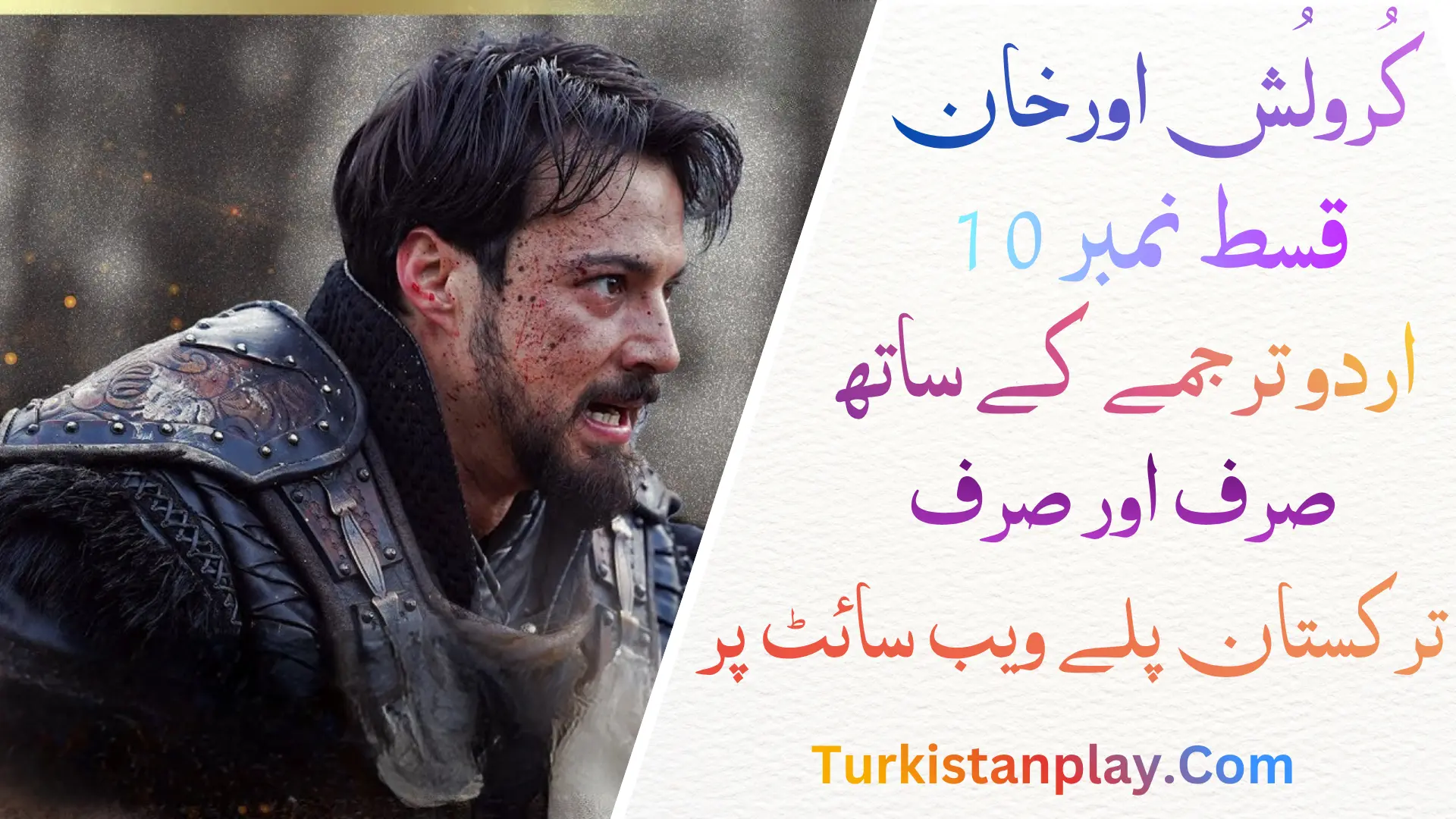
Kurulus Orhan Episode 10 In Urdu Subtitle
The Fall of Bursa: Asymmetric Warfare, Imperial Handover, and the Rise of the Ottoman Oak
The transition of a regional principality into a world-spanning empire is rarely decided by open-field combat alone. It requires a flawless mixture of tactical genius, political counter-espionage, and an unyielding governing philosophy centered on justice. In the final chapter of the long campaign for the Byzantine stronghold of Bursa, the early Turkish forces faced their ultimate test.
Faced with a multi-front conflict against both traditional Byzantine governors and fanatical rogue Catholic orders, Orhan Bey deployed groundbreaking subterranean tactics, executed a brilliant diplomatic handover, and fulfilled his father Osman Bey’s dying vision—transforming a frontier tribe into a permanent state.
1. The Crucible in the Valley: Crushing Hector’s Knights
The final push for Bursa began with a decisive engagement that proved the tactical maturity of the Kayı military command. Cerkutay Bey reported to Osman Bey that despite being significantly outnumbered by the enemy vanguard, the Turkish forces successfully turned harsh terrain conditions into their primary weapon.
By positioning elite archers along the hillsides and completely blocking the narrow valley exit, the alps (elite warriors) eliminated any possibility of enemy escape. When Hector’s rogue knights launched a massive, desperate frontal charge, they were systematically funneled into a lethal trap.
Orhan Bey strategically countered each defensive realignment, while Boran Bey led his forces to repel a dangerous flank attack. Fueled by rhythmic shouts of “Allahu ekber,” the Turkish forces showed zero mercy to the fanatical Crusaders on the battlefield. The victory was absolute; Hector’s field army was completely dismantled, leaving no knights alive to reinforce the city.
2. Subterranean Sabotage: Urban Guerrilla Warfare
While the open-field threat was neutralized, the thick walls of Bursa remained a massive obstacle. Rather than risking high casualties through a direct siege, Orhan Bey initiated an innovative, clandestine offensive. Turkish engineers and alps began systematically expanding a network of secret underground tunnels designed to bypass the city’s defenses entirely.
The tunnel openings were extremely narrow, allowing only one person to pass at a time under heavy guard. Once inside, the infiltrating alps launched precision surprise strikes directly on the city walls, sowing massive chaos and shattering the morale of the defenders.
Recognizing the extreme danger, the Byzantine command ordered an immediate counter-breach to seal the tunnels. In a dark display of urban guerrilla warfare, rogue cathedral guards (Mabedçiler) triggered a massive explosion inside the tunnels, causing a catastrophic collapse that trapped several Turkish warriors. Despite this severe setback, the surviving alps declared their absolute resolve, vowing to sacrifice their lives to keep the operational line open.
3. The Religious Split: Neutralizing the Fanatical Knights
Inside the walls of Bursa, the political landscape grew incredibly fragile. While Orhan Bey attempted to engage in pragmatic negotiations with Byzantine officials, a dangerous Catholic warrior order—the Mabet Şövalyeleri (Temple Knights)—actively rebelled against the Byzantine Emperor’s central authority.
Driven by extreme religious fanaticism and a refusal to surrender, these rogue knights initiated a violent uprising inside the city, intending to burn Bursa to the ground rather than see it fall to the Muslims—a move mirroring the historical destruction of Constantinople.
This internal coup threatened to ruin any hope of a peaceful transition. However, the Murabitin (spiritual defender soldiers) inside the city moved rapidly to confront and neutralize the rebellious Crusaders. By systematically eliminating the fanatical faction from within, these internal forces successfully opened Bursa’s massive gates to Orhan Bey’s waiting army, rendering further siege operations unnecessary.
4. The Imperial Handover: High-Stakes Diplomacy
With the gates compromised and the fanatical knights eliminated, negotiations reached a historic climax. Byzantine governors presented Orhan Bey with massive amounts of gold, tax exemptions, and regional alliances if he would abandon his claim to the city. Orhan firmly rejected the offer, understanding that Bursa was not a economic commodity, but the foundational pillar of his future state.
Orhan Bey presented the Byzantine commander, Leon, with a strict ultimatum: a peaceful imperial handover or total war. To prevent a bloody sack of the city and protect the civilian population from harsh treatment, the Byzantine authorities essentially conceded to Orhan’s terms.
A historic agreement was signed: the Byzantine crown agreed to pay a peaceful surrender tribute of sixty thousand gold coins. To secure the political logistics of the handover and protect the region from external interference, Orhan stationed three thousand alpine guards near İznik, completely cutting off any remaining connection between Bursa and Constantinople.
5. Pax Ottomanica: Justice and Civil Reconstruction
On the formal day of capitulation, Commander Leon officially surrendered the keys of the city, marking a permanent transfer of regional power. The Kayı tribe’s blue banner was raised high over the battlements of Bursa, signaling the birth of a new political era.
Orhan Bey instantly implemented a governing policy based on compassion, fairness, and peaceful co-existence:
- The Guarantee of Freedom: He pledged absolute safety to all residents of Bursa, guaranteeing the strict protection of their lives, ancestral property, and religious practices.
- Anti-Coercion Policy: He explicitly prohibited forced conversions, ensuring that local Christian communities could worship freely under Islamic rule.
- Civil Infrastructure: Transitioning immediately from military dominance to civil development, Orhan appointed Boran Bey to oversee the city’s recovery. The state established public workshops and free soup kitchens (imarets) to revitalize the urban economy and aid the poor.
6. The Passing of the Mantle: The Vision of the Great Oak
As the city celebrated its freedom, the narrative turned back to the quiet camp where the founding father, Osman Ghazi, neared his death. In a deeply emotional father-son council, Osman passed his final will and testament to Orhan Bey. He urged his son to never look at Bursa as a mere military prize, but as a sacred responsibility to establish permanent social justice, protect the weak, and expand the frontiers through gaza (holy defense) without falling into the trap of complacency.
Osman Bey’s final, prophetic advice outlined the spiritual foundation of statecraft, reminding the young leader that all worldly power ultimately belongs to God, and authority must always be balanced by mercy and wisdom.
He envisioned the Osmanoğulları dynasty not as a brutal conquering force, but as a majestic, universal oak tree whose massive roots were anchored in divine law, providing protective shelter, peace, and voice to seventy-two distinct nations. With these words, the legendary leader closed his eyes, leaving Orhan Gazi to rule a centralized empire built to alter the course of global history.
Frequently Asked Questions (FAQs)
1. How did the Turkish forces use the terrain to defeat Hector’s army?
During the battle in the valley, Cerkutay Bey utilized a classic encirclement strategy. Despite being outnumbered, the Turkish forces used the high hillsides to trap Hector’s advancing knights and completely blocked the narrow valley exit, preventing any retreat and ensuring a decisive victory.
2. What role did tunnel warfare play in the Siege of Bursa?
To avoid massive casualties from a direct assault on the city walls, Orhan Bey’s alps dug secret subterranean tunnels into Bursa. These allowed small, elite units to launch precision surprise attacks behind enemy lines, damaging defender morale and weakening internal security before the final surrender.
3. Who were the Mabedçiler, and why did they clash with Byzantine authority?
The Mabedçiler (Mabet Şövalyeleri or Temple Knights) were a fanatical Catholic militant faction inside Bursa. They directly opposed the Byzantine Emperor’s willingness to negotiate. Instead of surrendering peacefully, they launched a violent internal uprising and attempted to burn the city, but were ultimately neutralized by internal Murabitin soldiers.
4. What were the financial and political terms of Bursa’s surrender?
Orhan Bey demanded a peaceful surrender tribute of sixty thousand gold coins from the Byzantine authorities. In exchange, he guaranteed absolute protection for the residents’ lives, property, and religious freedoms, while stationing three thousand guards near İznik to isolate the city from imperial reinforcements.
5. What was Osman Bey’s final advice to Orhan Gazi regarding governance?
As he neared death, Osman Bey emphasized that power must always be balanced by justice, patience, and deep spiritual faith. He instructed Orhan to avoid complacency, focus on the civilian welfare of the people through public infrastructure, and build an inclusive empire that would provide shelter and justice to all diverse nations.