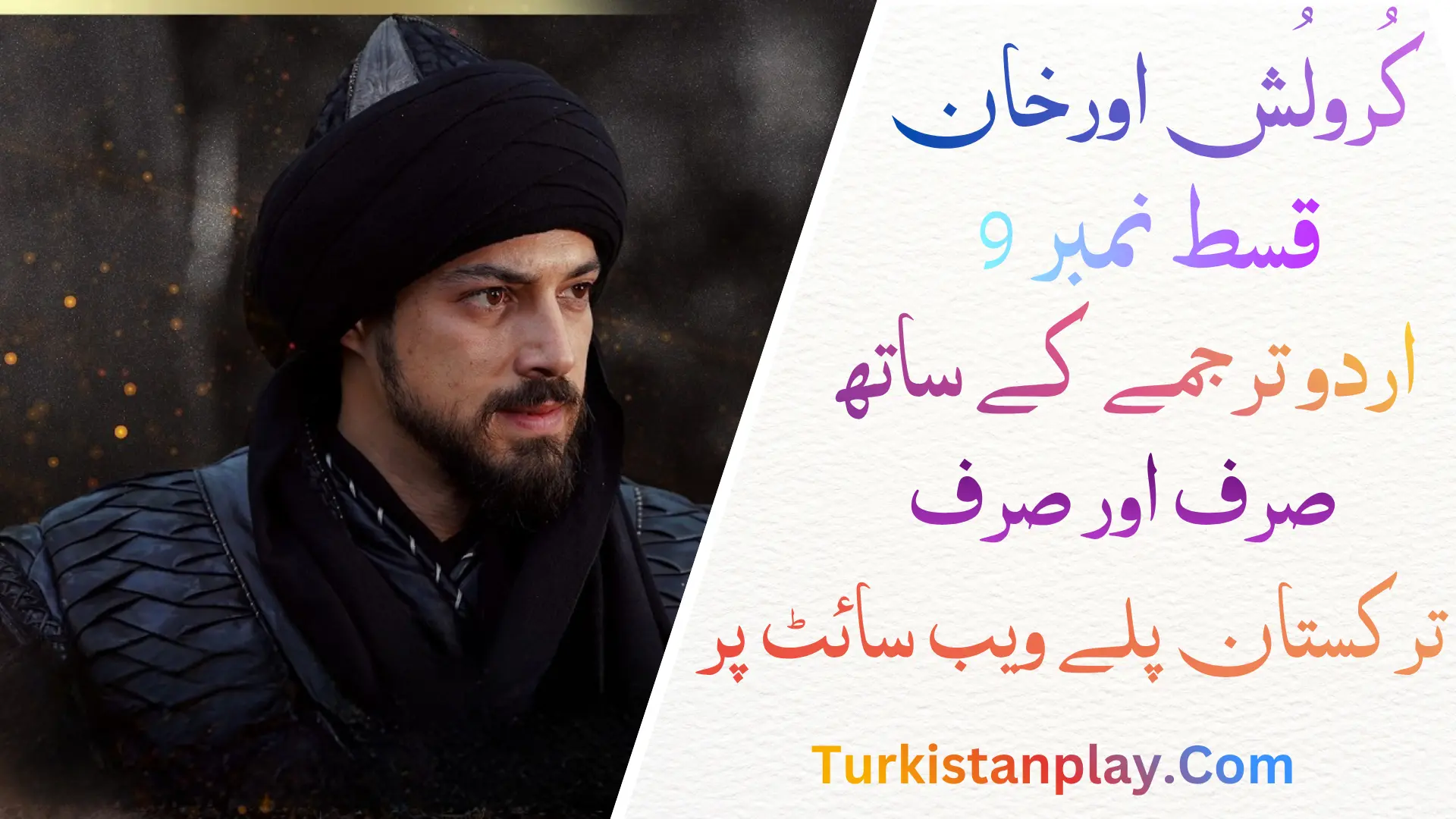
Kurulus Orhan Episode 9 In Urdu Subtitle
The Blood Feud of Bursa: Espionage, Imperial Poisoning, and the Valley Ambush
The ultimate test of a rising empire is its ability to withstand simultaneous internal sabotage and external onslaught. In the historic saga of the early Ottoman realm, the campaign for the strategic prize of Bursa transformed from a standard territorial blockade into a complex game of espionage, political assassinations, and deeply personal blood feuds.
When trusted commanders turn into lethal traitors and imperial families become bargaining chips, traditional battlefield warfare is no longer enough. To secure his father’s legacy and save his homeland from total destruction, Orhan Bey had to master the arts of counter-intelligence, navigate fragile political alliances, and deploy lethal asymmetric strategy.
1. The Traitor’s Masterstroke: Flavius and the Imperial Poisoning Plot
The volatile conflict around Bursa reached a fever pitch with the multi-layered treachery of Flavius. Locked in a long-standing personal and political vendetta with the Kayı forces—having previously orchestrated the murder of Orhan Bey’s brother—Flavius operated as a highly skilled and dangerous double agent.
Rather than relying on direct military confrontation, Flavius launched a covert masterstroke directly inside the Byzantine imperial court. He was tasked with subtly poisoning the Byzantine Emperor to instantly destabilize regional power and clear a path for Paleologos loyalists.
The plan relied on perfect deception. Flavius designed the poisoning to look like an elite Turkish operation, framing Orhan Bey to force the imperial Byzantine army to join forces with the Crusaders. To secure total political leverage, a synchronized plot was launched to abduct Selanik’s Princess Asporça, using her royal bloodline to manipulate the imperial succession. This advanced espionage network completely shifted the stakes of the war, forcing Orhan Bey to balance frontline troop command with a complex, cross-cultural political chess game.
2. Royal Resistance and Fragile Alliances
The capture of Princess Asporça created an instant explosion of tension inside the Kayı domain. Displaying immense imperial courage, Asporça fiercely resisted Orhan Bey’s authority, turning her captivity into a profound political confrontation. While Orhan attempted to force cooperation to protect the region from total Crusader domination, internal palace intrigues peaked as Nilüfer Hatun intervened, shifting the princess’s status to a “caged guest” in a high-stakes power play.
Simultaneously, Orhan Bey had to navigate an incredibly fragile regional alliance with Temurtaş. Driven strictly by mutual survival and a shared desire to halt Orhan’s rapid rise, the two competing powers outlined a tentative pact. The political agreement contained strict, dangerous conditions—including the absolute requirement that the commander Şahinşah remain completely unharmed. This alliance of convenience revealed the deep political fragmentation of medieval Anatolia, where strategic partnerships were constantly haunted by the threat of immediate betrayal.
3. The Shadow War: The Mabet Knights’ Counter-Offensive
While Orhan Bey systematically organized a covert tunnel operation to bypass the thick walls of Bursa without taking heavy siege casualties, the Mabet Knights (Temple Knights) struck back with terrifying, unconventional brutality. Led by their ruthless commander, Hector, the knights explicitly rejected any surrender to the emperor and targeted the Kayı infrastructure.
Utilizing sudden, highly coordinated surprise ambushes across the countryside, Hector’s forces launched devastating raids on local Turkish villages and towns. This campaign of terror took a massive physical and emotional toll on the Kayı leadership, resulting in the tragic deaths of several prominent Beys (tribal chiefs). The sudden loss of his core council left Orhan’s forces in a desperate position, transforming the siege into an immediate, existential race against time to uproot the fanatical order once and for all.
4. Love and Duty: Breaking Societal Expectations
Amidst the smoke of burning villages and palace intrigue, a deeply moving human subplot emerged within the tribal camp. Fatma Hatun found herself caught between intense familial pressure and individual desire. While her family pushed for a traditional, politically advantageous marriage alliance with the wounded warrior Yiğit Bey, Fatma chose to break from societal expectations.
In a moment of profound emotional depth and personal risk, Fatma openly confessed her love for Akçaora, a skilled man operating under the simple guise of a merchant. She presented him with an al yazma (a symbolic red scarf), a traditional gesture representing a binding, lifelong commitment. This romantic reconciliation celebrated identity and mutual devotion over forced political duty, providing a powerful contrast to the brutal violence dominating their daily lives.
5. The Valley Ambush: Executing the Final Blueprint
The ultimate turning point of the conflict was forged in a moment of deep, collective mourning. While Orhan Bey’s forces successfully breached and claimed the city of Bursa, the victory was instantly tempered by a catastrophic personal loss—the death of Orhan’s father, Osman Ghazi. Receiving his father’s final will and testament, Orhan accepted the sacred instructions to bury him near Bursa and carry the central Islamic banner forward without a single moment of pause.
Refusing to sink into endless mourning, Orhan Bey channeled his grief into absolute tactical resolve. Bolstered by the timely arrival of elite warrior reinforcements led by Şamil and Turahan, Orhan designed a lethal multi-layered ambush to trap Hector’s advancing Crusader army inside a narrow valley.
The strategy required the perfect, hidden placement of elite military bands led by commanders like Şahinşah, Avcı, Boran, and Cerkutay. By deploying concealed ropes, physical barriers, and tactical traps, the Kayı forces completely encircled the valley to prevent any possibility of enemy escape.
By utilizing successful intelligence to eliminate the threat of sudden enemy counter-attacks, Orhan’s forces completely trapped the Crusader vanguard. Framing the final confrontation as an absolute struggle between faith and corruption, the Kayı warriors charged into the valley. Backed by the thunderous collective cry of “Allahu Ekber,” they initiated the decisive battle to secure the sovereign identity and long-term independence of the Oğuz Turkic state.
Frequently Asked Questions (FAQs)
1. What was Flavius’s ultimate grand strategy against the Byzantine Emperor?
Flavius sought to completely destabilize regional power by subtly poisoning the Byzantine Emperor. To maximize the political chaos, he framed Orhan Bey for the assassination, intending to turn the imperial Byzantine forces against the Turks, while simultaneously kidnapping Princess Asporça to use her royal lineage as succession leverage.
2. Why did Orhan Bey form a political alliance with Temurtaş?
Orhan Bey entered a fragile pact with Temurtaş based entirely on mutual interest and shared regional survival. Both leaders needed to combine their influence to resist larger imperial forces, though the alliance was defined by extreme mutual distrust and strict conditions regarding the safety of key commanders like Şahinşah.
3. How did the Mabet Knights disrupt the Siege of Bursa?
Led by Hector, the Mabet Knights (Temple Knights) launched an aggressive counter-offensive using surprise ambushes. Instead of fighting in the open, they targeted vulnerable Turkish villages and launched unexpected strikes that killed several prominent Kayı Beys, severely damaging tribal morale and forcing a crisis within Orhan’s command.
4. What was the symbolic significance of Fatma giving Akçaora a red scarf?
The presentation of the al yazma (red scarf) was a profound cultural gesture of lifelong romantic commitment and binding love. By choosing Akçaora over an arranged, politically advantageous marriage with Yiğit Bey, Fatma chose personal happiness and individual agency over rigid tribal social expectations.
5. What was Osman Ghazi’s final will to Orhan Bey?
Osman Ghazi’s last will and testament instructed Orhan Bey to bury him near the newly conquered city of Bursa, put aside paralyzing grief in favor of rapid justice, mobilize the Alp warriors, and continuously expand the sovereign frontiers to protect the faith and independence of the Turkish people.
Conclusion
The blood-soaked victory at Bursa stands as a permanent monument to the power of strategic patience and unyielding faith. By outmaneuvering the sophisticated imperial poisoning plot of Flavius, managing the volatile geopolitical demands of Byzantine royalty, and executing a flawless multi-layered valley ambush against Hector’s Crusaders, Orhan Bey successfully fulfilled his father’s final testament. This monumental triumph ensured that the early Ottoman state transitioned from a vulnerable frontier principality into a permanent, highly centralized empire.