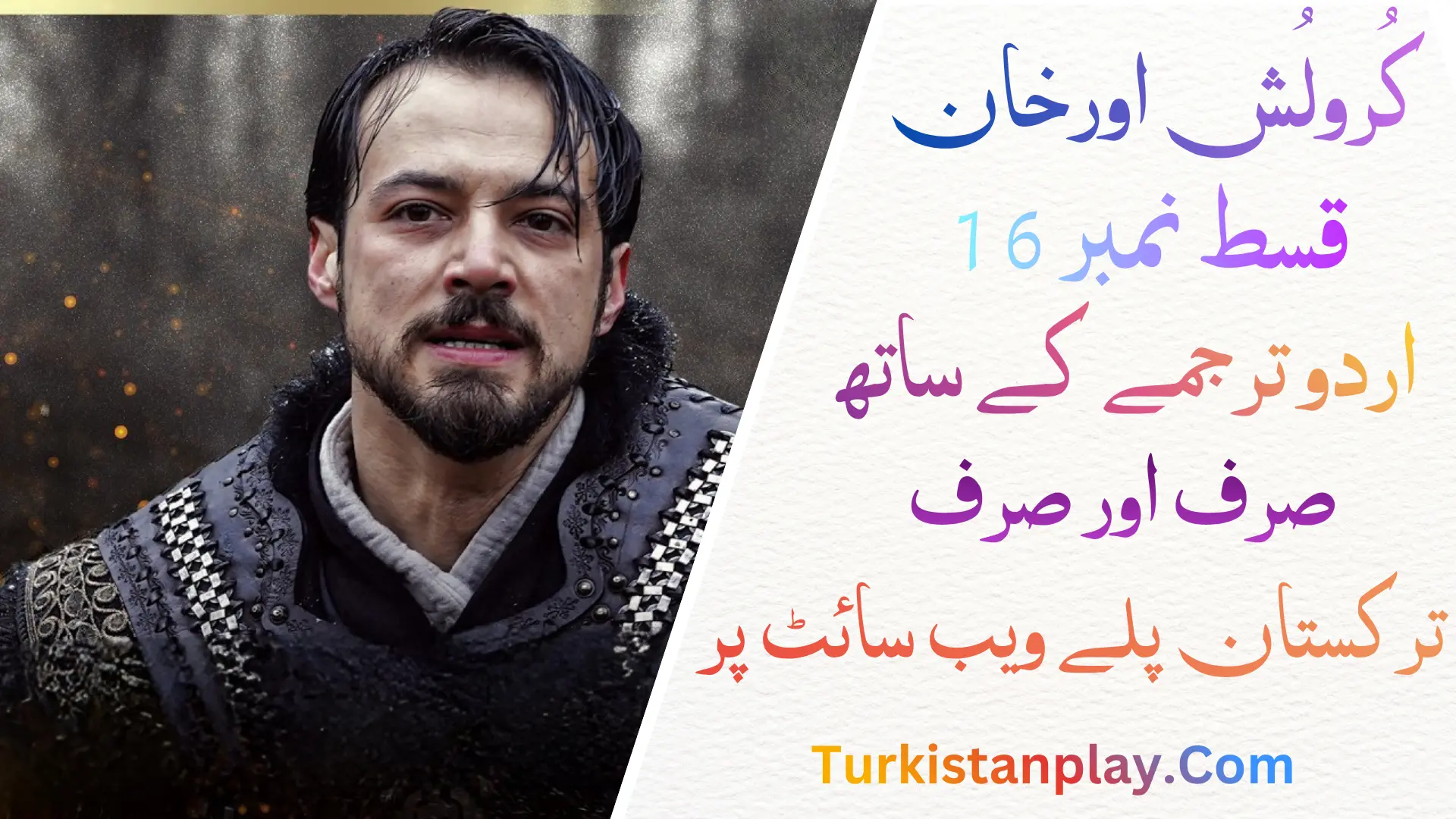
Kurulus Orhan Episode 16 In Urdu Subtitle
The Taşpınar Double Ambush: Identity Crises, Fire Towers, and the Shattering of the Uçlar Meclisi
The expansion of a sovereign state is defined by the moment its borders become a hunting ground for rival coalitions, testing its administrative structure, counter-espionage networks, and dynastic lineage simultaneously. In this high-stakes, volatile chapter of early Ottoman state formation, the struggle between Orhan Bey’s rising administration and an alliance of rival principalities reached a dangerous climax.
Triggered by a double-sided ambush at the Taşpınar border, the conflict quickly evolved from a simple territorial battle into a profound war of identity, advanced military signaling, and fragile inter-tribal politics that reshaped the future of Anatolia.
1. The Taşpınar Borders: A Convergence of Ambush Plots
The active frontier was thrown into intense strategic panic when intelligence reports exposed a massive, double-sided ambush planned at the Taşpınar border. The trap, engineered by Yahşi Bey—the father of the treacherous commander Demirhan—was designed to exploit the diplomatic peace process. Backed by the political machinations of the Byzantine princess Asporça, the hostile coalition extended invitations to multiple regional factions, intentionally drawing them to the border to launch a coordinated strike on Orhan Bey’s central leadership.
This operational crisis quickly revealed severe internal fractures within the enemy ranks. Acting on deep-cover intelligence from Dafne, Princess Asporça launched a precision strike to kidnap Orhan’s pregnant wife, Nilüfer, using her and her unborn child as ultimate political hostages.
However, the plan suffered a major operational failure due to the rigid code of honor held by the vanguard commander, Flavius. Refusing to execute a pregnant woman, Flavius fled the field, instantly unraveling the coalition’s strategic timing and forcing the leadership into an environment of extreme paranoia.
2. The Kipchak Identity Crisis: The Defection of Flavius
The most significant political pivot of the campaign occurred when Flavius officially defected to Orhan Bey’s side, completely shocking his former co-conspirators. This massive shift in allegiance was driven not by political bribery, but by a profound, newly uncovered truth regarding his lineage. Flavius discovered a deep family secret: his true biological father was a Muslim Kipchak Turk, not the Byzantine noble Muzalon as he had been led to believe.
This traumatic revelation, accompanied by fragmented childhood memories of a violent family massacre, completely shattered his old identity. Choosing to align his sword with his true heritage, Flavius launched a vital counter-infiltration mission:
- Foiling the Border Scheme: Flavius successfully used his insider knowledge of the army routes to block Demirhan’s plans, rescuing Nilüfer and key family members from captivity.
- The Chase for Traitors: With his treachery exposed, Demirhan fled the battlefield, prompting a relentless pursuit tracked by active blood trails and tactical intelligence across the border zones.
- The Unresolved Quest: Despite receiving offers of complete tribal brotherhood and a permanent home at Orhan’s camp, Flavius eventually chose to depart the territory to search for his remaining family roots, leaving the door wide open for a future return.
3. Advanced Strategy: The Kargu Signaling System
Recognizing that the combined forces of Princess Asporça, the Karesioğulları clan, and the Eretna Beylik were attempting to completely cut off his support corridors from İzmit and Constantinople, Orhan Bey deployed an advanced defensive military policy. He authorized the rapid construction of a massive kargu (a strategic watchtower) near the active frontiers of İznik.
The kargu served as the structural heart of the Ottoman defensive architecture. Built to a monumental height, the watchtower was engineered to control vital regional trade routes and maintain continuous reconnaissance.
By utilizing advanced fire-signaling techniques across the towers, the command successfully monitored hostile troop movements, coordinated rapid deployment of the alps, and neutralized surprise raids before they could strike vulnerable villages, integrating terrain and communications to secure a massive tactical advantage.
4. The Bloody Axe of Constantinople: The Arrival of Andreas
The geopolitical stakes escalated significantly with the arrival of Andreas, a famously ruthless commander nicknamed the “Bloody Axe,” who traveled directly from Constantinople to assume control of the anti-Ottoman coalition. Disgusted by the strategic failures of Princess Asporça and the exposed treachery of Demirhan, Andreas rapidly took absolute control of all military operations.
Andreas openly resisted Asporça’s authority, implementation-wise shifting the strategy from emotional border skirmishes to a cold, multi-faceted containment policy. He organized a grand unity council, drawing all rival beys together to form an unbreakable military wall to isolate Orhan Bey’s expanding domain.
However, this coalition faced immediate internal threats. Dursun, a young noble driven entirely by his deep affection for Gonca Hatun, secretly aligned himself with Alaeddin’s imprisoned group, operating as a hidden intelligence asset to leak strategic coalition plans to the Ottoman forces.
5. The Fracture of the Uçlar Meclisi
The political climax of the campaign took place during a formal assembly of the Uçlar Meclisi—the coalition council trying to impose a new order across Anatolia without acknowledging Ottoman authority. The council gathered at Biga Limanı to divide the region, allocating lands to form new, independent beyliks. To signal his complete alienation and political disgrace, Demirhan was granted a meager, highly disrespectful share of territory.
The council sent a formal ultimatum to Orhan Bey, demanding that he submit to their mapping decisions or face absolute destruction. Sultan Orhan met their demands with fierce, unyielding defiance.
Publicly rejecting the legitimacy and authority of the Uçlar Meclisi, Orhan asserted his divine right to the conquered lands. He stated that the destiny of Anatolia would be decided strictly by the sword, instantly turning the diplomatic trade assembly into an open declaration of all-out war.
6. Love vs. Expediency: The Shattered Alliances
The heavy strain of this multi-front war extended deep into the domestic and personal lives of the nobility. While political marriages were actively deployed as standard medieval tools to build alliances, they triggered massive internal friction. Fatma Hatun’s secret romance with Flavius was suddenly exposed to Yiğit Bey, causing severe court intrigue.
This love triangle directly clashed with the state’s arranged marriage plans, forcing a heated confrontation between Flavius and Yiğit Bey over Fatma’s loyalty, honor, and past revenge decisions.
Furthermore, severe family tragedies worsened the political instability. Sibling conflicts erupted between Alaeddin and Mehmet over past failures, culminating in a dead-end physical fight.
The death of a mother, resulting from deep grief and family strife, cast a heavy symbolic shadow over the camp. Mourning their profound loss, figures like Gonca Hatun had to channel their immense personal grief into absolute tactical resolve, proving that within the palace, individual heartbreak was permanently intertwined with the survival of the state.
7. The Fated Charge: The Battle for Anatolia
The final segment of the campaign saw all diplomatic paths completely close. Both sides mobilized their absolute maximum military strength, readying their forces for a decisive battle to determine the legacy and sovereign identity of the region.
Princess Asporça proved to be far more cunning than anticipated, utilizing advanced border tactics that inflicted early casualties on the Ottoman vanguard.
Sultan Orhan remained completely unyielding, refusing to bow, retreat, or surrender an inch of territory. Rallying his alps and reinforced by the shifting loyalties of new defenders, Orhan issued a powerful, traditional battle cry, charging directly into the enemy lines.
The impending violent confrontation at the borders was no longer a localized skirmish; it was the ultimate, historical crucible that would decide which dynasty possessed the structural maturity and absolute strength to rule the future of Anatolia.
Frequently Asked Questions (FAQs)
1. What was the tactical purpose of the “Kargu” watchtowers?
The kargu was an advanced military watchtower built near İznik for reconnaissance and communication. It allowed the early Ottoman forces to control vital regional trade routes and use fire-signaling techniques to rapidly transmit warning messages about incoming enemy troop movements across the frontiers.
2. Why did Flavius switch his allegiance to Orhan Bey’s camp?
Flavius changed his allegiance after discovering a traumatic family secret: his true biological father was a Muslim Kipchak Turk, not a Byzantine noble. This profound revelation regarding his heritage and bloodline challenged his personal identity, leading him to use his military knowledge to save Orhan’s family.
3. Who was Andreas, and how did his arrival affect the anti-Ottoman coalition?
Andreas was a ruthless commander from Constantinople known as the “Bloody Axe.” His arrival shifted the conflict because he took supreme command of the military operations, sidelined Princess Asporça’s authority, and organized a grand coalition of beys to strategically isolate Orhan’s expansion.
4. What was the “Uçlar Meclisi,” and why did Orhan Bey defy it?
The Uçlar Meclisi was a coalition council formed by rival Turkish beys and Byzantine schemers to divide regional lands into independent principalities without Ottoman input. Sultan Orhan defiantly rejected their authority to protect his sovereign territorial rights, choosing war over political submission.
5. How did personal relationships influence the intelligence network during the crisis?
Personal bonds played a critical role behind the scenes. For example, Dursun’s deep affection for the imprisoned Gonca Hatun motivated him to align with Alaeddin’s group, acting as a deep-cover informant to provide the Ottoman forces with crucial strategic intelligence about the coalition’s movements.
Conclusion
The volatile double ambush at Taşpınar remains a permanent lesson in grand statecraft. By outmaneuvering the multi-front coalition of the Uçlar Meclisi, deploying the advanced reconnaissance of the kargu signaling system, managing the deep identity transformations of frontline commanders like Flavius, and standing firm against the brutal military arrival of Andreas, Sultan Orhan secured his independent destiny. This ultimate triumph proved that the rising dynasty was built on a foundation of absolute law, strategic depth, and unmatched family resilience, ready to alter the course of history for centuries to come.