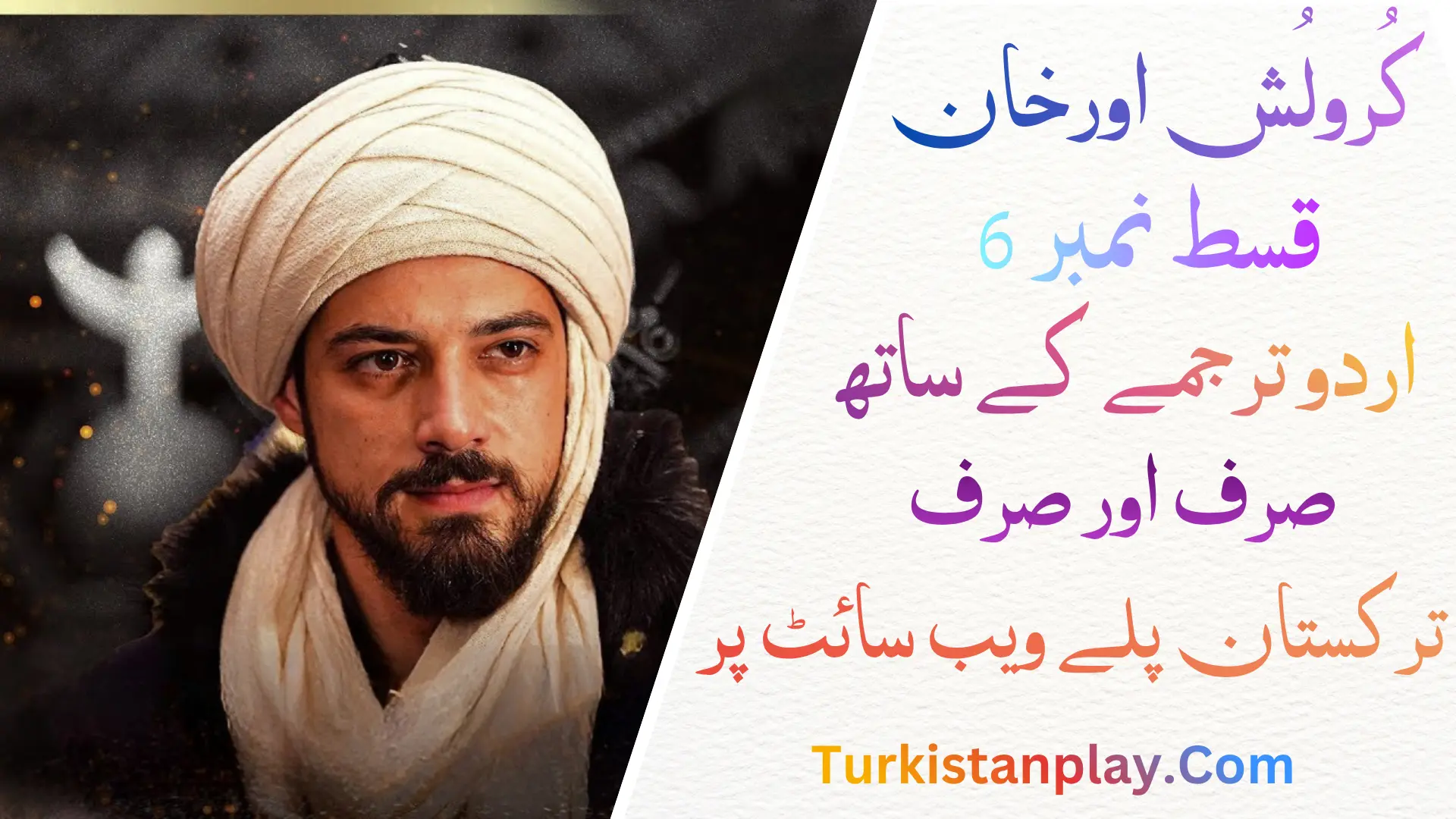
Kurulus Orhan Episode 6 In Urdu Subtitle
Hearts, Minds, and Justice: How Orhan Bey Stabilized the Nascent Ottoman State
The blueprint of a lasting empire is never drawn solely with the tip of a sword. While military conquest wins territory, it is the implementation of absolute justice, sophisticated diplomacy, and civic welfare that transforms a freshly conquered landscape into a durable state. In the historical saga of the early Ottoman realm, the period surrounding the consolidation of İznik and Bursa serves as a vital case study in statecraft.
Faced with escalating military pressure from the Byzantine Emperor, hostility from the Ilkhanid governor Temurtaş, and severe economic crises at home, Orhan Bey pioneered an administrative doctrine that balanced military might with profound civic engagement. This is the deep narrative of how the Kayı tribe transitioned from a frontier principality into a structured, inclusive, and legally governed state.
1. Justice as the Anchor of State Legitimacy
In a fragmented and hostile environment, Orhan Bey established a foundational legitimacy that set his rule apart from neighboring principalities. He proclaimed a clear, unyielding guarantee to all peoples—regardless of their background, ethnicity, or faith—who sought refuge under his banner: their lives, possessions, and religious freedoms were strictly protected.
To prevent arbitrary violence, tribal vigilantism, or systemic corruption, Orhan Bey instituted a centralized judicial framework ruled by kadıs (judges).
- Institutionalization of Law: By stripping individuals of the right to take the law into their own hands, the state asserted absolute control over public order.
- The Principle of Equality: The kadıs administered justice with strict fairness across all social classes, ensuring that local Christian populations and arriving Turkish migrants were treated equally under the law.
- A Magnet for Migration: This legal inclusivity was tied to a grand vision: the belief that “seventy-two nations” would eventually flock to their borders, seeking the peace and stability that the Byzantine Empire could no longer provide.
2. Marriage Diplomacy: Solidifying the Socio-Political Fabric
While the justice system stabilized the interior, external political security required sophisticated, calculated diplomacy. The historical narrative highlights the extensive use of strategic marriage proposals involving Orhan Bey’s daughters and the leaders of rival Turkish beyliks.
In early Turkic governance, these unions were far from simple personal relationships; they were high-stakes instruments of statecraft.
The intricate process—involving extended diplomatic waiting periods, deep family consultations, and complex tribal negotiations—was designed to build powerful regional deterrents, prevent devastating inter-tribal warfare, and lay the groundwork for peaceful unification. Through marriage diplomacy, the Kayı Beylik successfully neutralized local rivalries without expending vital military resources.
3. Demographic Engineering and Tribal Migration
A major structural challenge facing Orhan Bey’s administration was the low population density in newly acquired frontier lands. Military occupation alone could not legitimize territorial claims; it had to be followed by demographic settlement.
To solve this crisis, Orhan Bey designed comprehensive economic incentives to facilitate the mass migration of Oğuz-Turkmen clans from the east. Arriving clans were settled in strategic zones and granted vital tax exemptions.
By balancing battlefield conquests with targeted social migration policies, the state turned vulnerable borderlands into permanent, economically productive Turkish-Islamic settlements, establishing a human shield against Byzantine counter-offensives.
4. Crisis Management: Proactive Responses to Economic Hardship
The resilience of Orhan Bey’s governance was severely tested by a period of extreme economic strain, characterized by harsh winter conditions, widespread famine, and massive livestock losses.
Instead of allowing the treasury to stagnate, the leadership launched immediate, proactive social policies:
- Resource Mobilization: Nilüfer Hatun took direct administrative charge, commanding the systematic increase of livestock numbers and managing critical emergency treasury disbursements to the public.
- Labor Incentives: Orhan Bey supported these welfare measures by organizing direct financial aid for the populace and increasing payment rates for shepherds to protect the remaining agricultural infrastructure.
This sophisticated crisis response proved to the civilian population that the state was deeply invested in their survival, successfully binding the hearts of the people to the ruling dynasty during times of peace and hardship alike.
5. The Double-Edged Policy: Confrontation and Compromise
On the geopolitical chessboard, Byzantine agents like Flavius and the imperial envoys from Constantinople maintained relentless pressure, utilizing both military intimidation and political subversion to break the Kayı blockade around Bursa.
When imperial envoys offered massive amounts of wealth in exchange for lifting the siege, Orhan Bey met them with firm, absolute defiance, signaling a zero-sum mentality regarding territorial sovereignty. However, Orhan also demonstrated advanced diplomatic flexibility. He kept communication channels open, engaging in long, drawn-out negotiations simply to buy critical time, rest his forces, and strengthen his defensive positions.
This dual approach—combining rigid military readiness with fluid diplomatic deception—allowed the early Ottoman precursors to safely navigate the perilous political landscapes of Anatolia.
6. Women as Political Actors and Cultural Mediators
The social and political governance of the Kayı tribe completely counters traditional, simplistic narratives of passive female roles in medieval history. Powerful figures like Nilüfer Hatun, Fatma Hatun, and Halime Hatun operated as influential political actors and cultural mediators.
These women wielded genuine structural authority in crisis management, treasury distribution, and marriage diplomacy. They acted as the core guardians of tribal honor while actively steering the evolution of traditional customs (töre) into formal state laws, ensuring the continuity of the social fabric while the men were deployed on extended military campaigns.
7. The Concept of “Merciful Victory”
Perhaps the most significant military-political innovation of Orhan Bey’s reign was the doctrine of “merciful victory.” The Kayı forces recognized that brute military dominance was unsustainable over long periods.
By combining traditional battlefield excellence with immediate civilian aid, food distribution, and absolute legal protection for conquered towns, the state won the minds of the local populations. This strategic mixture of strength and mercy significantly reduced local resistance, making the occupation of strategic strongholds highly sustainable and deeply legitimate.
Frequently Asked Questions (FAQs)
1. What was Orhan Bey’s approach to religious and civil freedom?
Orhan Bey guaranteed absolute safety of life, property, and religious practice to everyone who settled under his flag. By establishing a fair society where local Christians and Turkish migrants enjoyed equal protection, he built deep public trust and attracted massive regional migration.
2. How did the institution of “Kadıs” change early Ottoman governance?
The appointment of kadıs (centralized judges) marked a major evolution from flexible tribal customs to a formalized state legal structure. It established a uniform rule of law, prevented corrupt practices, and stopped individuals from seeking private vengeance, which stabilized newly conquered territories.
3. Why were marriages treated as major diplomatic events during this era?
Marriages between the daughters of the ruling family and leaders of neighboring beyliks were highly calculated political alliances. They were utilized as non-violent diplomatic tools to unify competing Turkish tribes, form defensive coalitions, and prevent costly internal wars.
4. What was the purpose of encouraging mass Turkmen migrations?
Newly conquered lands around Bursa and İznik had very low populations, making them vulnerable to Byzantine counter-attacks. Orhan Bey offered tax exemptions and financial incentives to eastern Oğuz-Turkmen clans to permanently settle these frontiers, securing the territory demographically.
5. What administrative roles did women hold in the early Ottoman state?
Women like Nilüfer Hatun held immense administrative power, particularly during economic crises and military campaigns. They managed emergency treasury disbursements, oversaw livestock and agricultural resource recovery, negotiated marriage alliances, and maintained social stability within the capital camps.
Final Thoughts
The early Ottoman state survived its most perilous crucible because its leaders understood that a durable empire requires a sophisticated administrative foundation. By replacing arbitrary tribal rule with centralized justice, utilizing population migration as a strategic asset, deploying marriage diplomacy, and introducing the doctrine of “merciful victory,” Orhan Bey successfully laid the institutional bricks for a multi-ethnic state that would soon alter the course of global history.