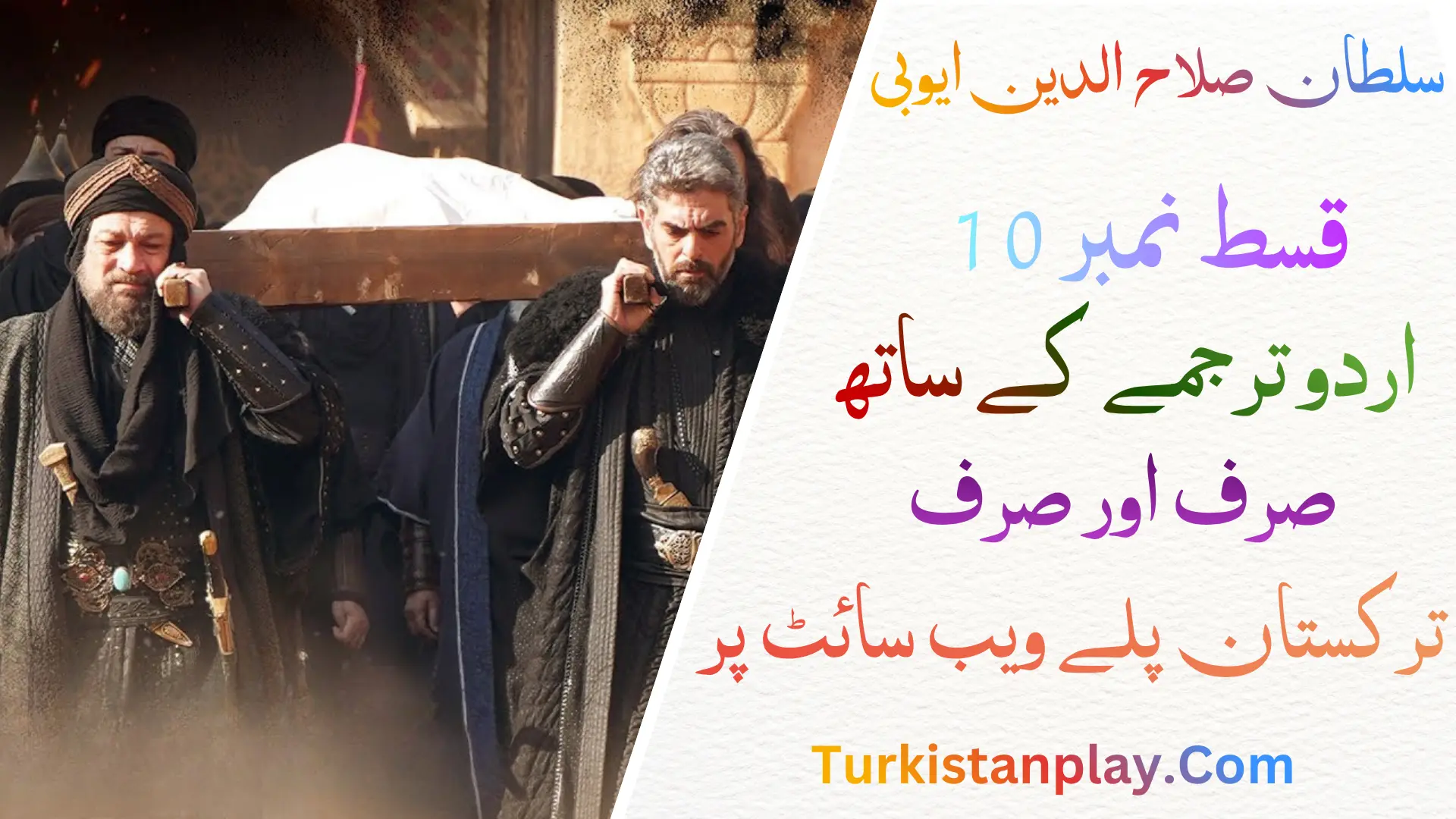
Sultan Selahaddin Eyyubi Episode 10 In urdu Subtitle
The Martyr’s Shadow: Hostage Diplomacy, Sacred Talismans, and the Hunt for Selahattin
The epic chronicle of the Crusade-era Middle East is frequently defined by the public movements of vast armies. Yet, some of the most critical turning points occurred in the immediate aftermath of devastating surprise attacks, where the missing body of a paramount commander could trigger either total internal collapse or a fierce revival of holy resistance. When the line between a leader’s physical death and his spiritual martyrdom becomes blurred, the resulting vacuum of power tests the absolute discipline of the state. The chaotic struggle following a brutal raid on the Muslim headquarters reveals a complex landscape of deep palace espionage, shifting tribal alliances, and a desperate race against time to rescue the living symbols of sovereignty.
The Chaos of Infiltration: The Raid on the Headquarters
The military stability of the realm was fractured in a single, devastating moment when enemy forces launched a violent surprise attack directly against the sovereign command post. The assault caught the defenders off guard while regular soldiers stood watch, resulting in a catastrophic breach of the headquarters and severe, localized destruction.
In the immediate aftermath of the slaughter, a profound crisis of leadership emerged: the central military commander, Melik Selahattin, was missing, his ultimate fate entirely unknown.
Despair and structural chaos quickly spread across the ranks as warriors searched desperately among the dead. To restore immediate cohesion, leaders issued unyielding directives emphasizing that a sovereign’s strict command must be treated as sharper than a sword. The leadership initiated an aggressive military regrouping, declaring that internal quarrels must be completely extinguished before the fractured factions could hope to mount an effective defense against the advancing enemy coalition.
Martyrdom and Momentum: The Vow of Retribution
As rumors of Selahattin’s death skyrocketed, the personal sorrow of the royal house transformed into a powerful ideological weapon. A father’s grief over losing his son was elevated through spiritual reflections that connected the tragedy directly to Islamic eschatological themes. By invoking Quranic verses that reflect on martyrdom and the eternal life of the righteous, the court elevated Selahattin as a sacred martyr for the entire global Muslim community (Ummah).
This spiritual elevation shifted the collective mood from mourning to absolute retribution. Warriors swore a solemn oath that cruelty would be repaid in kind, utilizing the legacy of their fallen commander as symbolic fuel to intensify the war against the Crusaders.
The Sacred Talisman: The Prophet’s Horseshoe Nail
Amidst the prevailing uncertainty regarding whether the missing leader was truly dead or secretly held captive, a powerful symbol of hope emerged to rally the faithful. The court introduced a unique, highly revered ring crafted by Selahattin himself. This sacred talisman bore a powerful emblem: a nail from the horseshoe of the Prophet Muhammad.
The warriors maintained an absolute belief that this talisman possessed spiritual protection, capable of strengthening the hearts of the faithful against overwhelming odds. The ring became a silent, living oath for the resistance, uniting the fighters behind a singular, unyielding cultural and religious mission: the ultimate reclamation of their homeland and the liberation of the holy city of Jerusalem (Kudüs).
The Wicked Alliance and Fractured Allegiances
The confusion surrounding Selahattin’s missing corpse led commanders to uncover a complex, manipulative enemy coalition. Rulers identified a “wicked alliance” involving coordinated maneuvers between advancing Crusader armies and hidden Assassin networks, who sought to conceal or misuse Selahattin’s fate for sinister political purposes.
Simultaneously, internal treachery threatened to cripple the defense from within. Heavy accusations were directed at a noble named Kar Tegin, who was blamed for contributing to the headquarters’ breach and betraying vital military movements.
As internal distrust threatened combat effectiveness, military orders were issued to neutralize Kar Tegin’s faction decisively. To hold the fracturing movement together under the weight of the siege, İsmet Hatun assumed firm, authoritarian control over the capital. Hatun threatened absolute force against all internal dissenters, enforcing strict discipline to ensure that factional rivalries did not sabotage the broader war effort.
Tactical Subterfuge: The Infiltration of the Enemy Fortress
To counterbalance the superior military power of Nurettin Zengi’s opponents, the leadership executed a brilliant, multi-layered tactical shift. They secured an unexpected military alliance with a local tribe known as the Berries, rapidly reinforcing their frontline strength.
Simultaneously, intelligence indicated a dual hostage crisis: the prominent noblewoman Süreya had been taken captive and cast into a remote enemy dungeon. Recognizing that an open assault against a heavily fortified stronghold would result in catastrophic casualties, the warriors deployed advanced subterfuge tactics.
An elite unit organized a high-risk covert operation, disguising themselves entirely as enemy knights to infiltrate the fortress walls undetected. This dangerous rescue mission aimed to exploit vulnerabilities within the enemy’s security protocols, proving that intellect must be merged with warfare—a philosophy captured by the courtly proverb: “one hand with the book, one with the sword.”
The Cave Confrontation and the Vision of Omar
The military search intensified as scouts used gathered intelligence to track Selahattin’s captors across rugged terrain, utilizing bloodstains and footprints to trace their movements. Warriors crossed a volatile river using makeshift rafts, pushing deep into enemy territory. The pursuit led them to a remote healer’s hut and eventually into a complex, dark system of underground caves where Selahattin was actively being held by his captors.
Inside the dark caverns, a fierce, close-quarters combat sequence unfolded. As steel clashed in the dark, the narrative invoked a powerful historical and spiritual vision: the historic conquest of Jerusalem by Caliph Omar ibn al-Khattab. By linking Selahattin’s immediate survival to revered Islamic history and ancient prophecy, the vision provided the warriors with an overwhelming surge of courage.
The saga reaches a critical turning point as a key captor confesses that he is not the ultimate architect of the conspiracy, but merely a servant of a higher, shadowy power known as the Lord of the Mountain. With the sudden arrival of Sultan Nurettin and powerful frontline reinforcements, the forces prepare for a decisive battle against Gabriel’s advancing lines, where the ultimate survival of the symbolic leader will be decided by raw martial valor.
Frequently Asked Questions (FAQs)
Q1: What triggered the immediate crisis within the Muslim command post?
The crisis was triggered by a violent, un-opposed surprise attack by enemy forces on the headquarters. The raid caused massive infrastructure damage, left several guards dead, and resulted in the disappearance of the central leader, Melik Selahattin, whose unknown fate sparked widespread panic and internal paranoia.
Q2: What was the significance of the ring introduced after Selahattin’s disappearance?
The ring was a sacred talisman created by Selahattin, bearing an emblem of the Prophet’s horseshoe nail. It served as a powerful symbol of spiritual protection and hope, uniting the fractured warriors under a shared, unyielding oath to retake the holy city of Jerusalem.
Q3: Who was Kar Tegin, and why was his faction targeted by the leadership?
Kar Tegin was a prominent internal figure accused of contributing to the headquarters’ breach through severe betrayal and collusion with external enemies. Because his suspicious behaviors threatened to destroy troop morale, military commands were issued to neutralize his faction to preserve internal order.
Q4: How did the warriors attempt to rescue Süreya from the enemy dungeon?
Rather than launching a dangerous open assault against superior numbers, the warriors utilized advanced tactical subterfuge. An elite unit disguised themselves completely in enemy knight attire to infiltrate the hostile fortress undetected, linking personal loyalty with clever political strategy.
Q5: What deep mystery was revealed during the final confrontation inside the caves?
During the high-stakes rescue operation inside the cave system, a key collaborator revealed that he was not the true antagonist of the campaign. Instead, he confessed to being a mere servant of a much larger, hidden shadow network directed by the mysterious “Lord of the Mountain.”