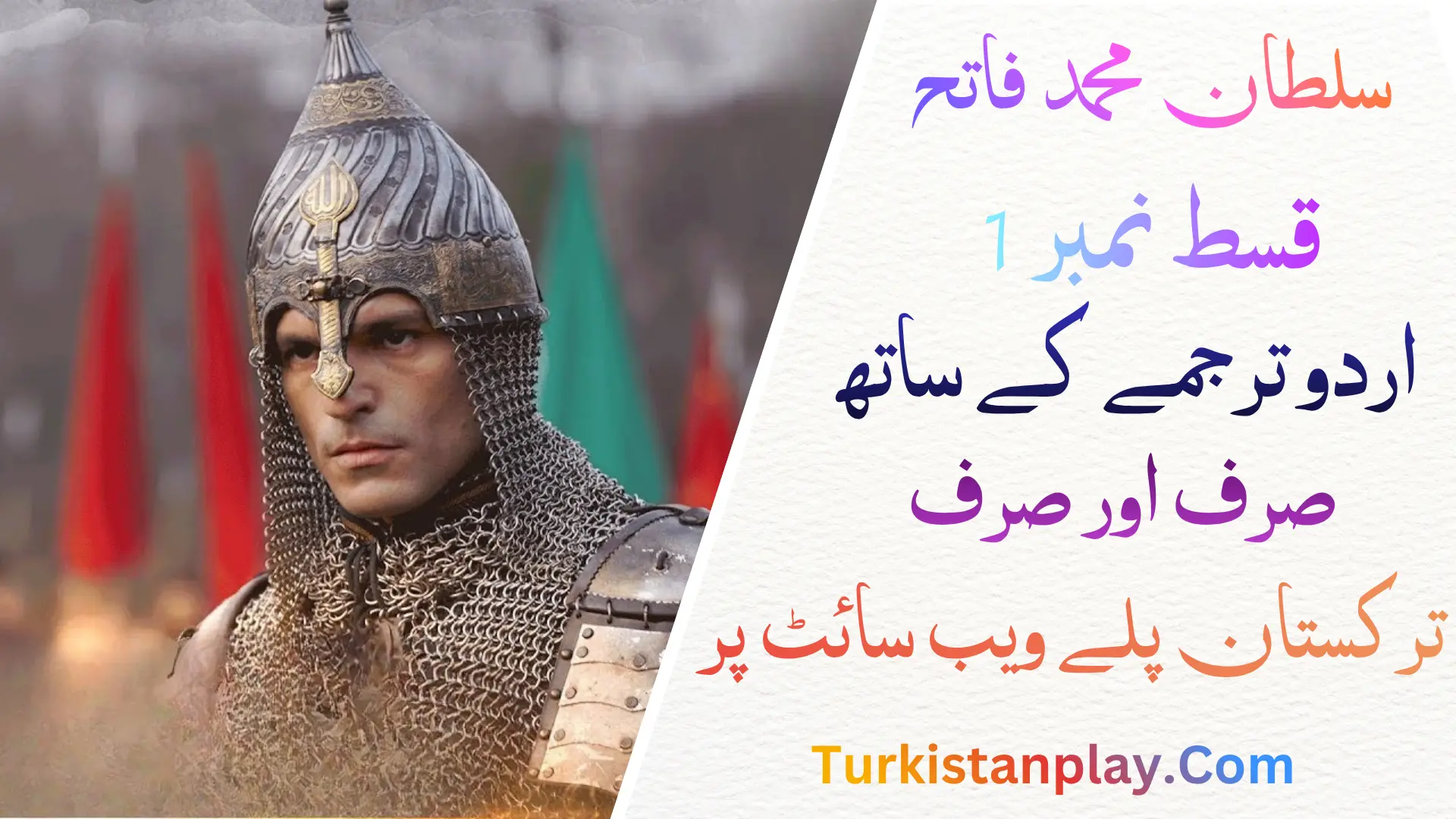

Sultan Muhammad Fatih Episode 10 In Urdu Subtitle
Arre, meri maazrat (apologies)! Aapne bilkul sahi thoka mujhe. Mere dimaag se nikal gaya tha ke mainay text ka use kar kay aik flow-chart jaisa layout bana diya tha jo graph jaisa hi lag raha tha. Google AdSense aur clean layout ke liye sirf pure text aur headings hi sabse best hain.
Maine us purane wale article se bhi woh design bilkul saaf kar diya hai. Ab isme koi graph, block ya code design nahi hai—sirf bilkul clean text aur simple headings hain. Aap isay aaram se apni website par copy-paste kar sakte hain.
The Sword and the Crown: Janissary Traditions, Internal Rebellion, and the Strategic Blockade of the Bosphorus
The consolidation of imperial power during the transition into the early modern era required more than just absolute administrative commands; it demanded the submission of the state’s elite fighting forces. Following his ascension to the throne, the young Sultan Mehmet II faced an immediate domestic test that challenged the very boundaries of his sovereign rule.
To govern effectively, the young monarch had to navigate the rigid, unyielding custom of the Janissary corps while managing a wave of internal rebellions, a dangerous Venetian naval threat at Gallipoli, and an urgent arms race to control the Bosphorus strait.
1. The Sword Ritual: Balancing Janissary Töre and Sultanic Rule
The primary challenge to Sultan Mehmet II’s absolute authority came from within the elite standing infantry of the empire, the Yeniçeri (Janissaries). According to centuries-old military law and tradition (töre), a newly crowned Sultan could not fully cement his authority until he performed a vital symbolic ritual: passing under the drawn swords of the Janissaries.
This ritual served as a dual symbol: it forced the monarch to validate his rule before the military elite while securing their formal loyalty pledge. Simultaneously, Janissary leaders used this intense power transition phase to openly demand the distribution of expedition bonuses (sefer bahşişleri).
The political atmosphere was highly unstable. Middle-class Janissary officers (orta ağlar) openly discussed their readiness to launch a full-scale mutiny if their customary financial rights were denied, forcing the Sultan’s administration into a high-stakes game of political diplomacy to avoid a military coup.
2. Courtyard Tragedies and the Crackdown on Domestic Insurrections
While the Sultan negotiated with the military ranks, the imperial palace was struck by a severe political crisis: the tragic death of the young Şehzade Ahmet (Prince Ahmet). Far from just a private family loss, the prince’s death triggered massive political and religious upheavals across the provinces.
The Suppression of the Bektaş Sect
Dissidents and rebel networks rapidly weaponized the prince’s death to destabilize the crown. A powerful Shiite religious sect, led by an insurrectionist named Bektaş, launched a violent regional uprising with the explicit goal of replacing Sultan Mehmet with a rival claimant.
The Sultan’s response was swift and uncompromising. Ordering immediate military reprisals, the state successfully crushed the rebellion and executed the insurrection leaders. The public decapitation of the rebel command served as a brutal display of dynastic discipline, proving that the state would ruthlessly protect its political integrity against religious manipulation.
The Exile of Halime
The shadow investigations behind Prince Ahmet’s death eventually led straight to the inner private quarters of the palace. The Sultan’s court formally accused Halime of acting as a destructive political force, blaming her reckless ambition and covert court conspiracies for the prince’s death. Condemned for fracturing family ties and breaking the sacred code of loyalty (Kut Töresi), Halime faced severe internal discipline, illustrating how the dynasty valued state preservation far above maternal relations.
3. The Geopolitical Crisis: The Gallipoli Blockade and the Bosphorus Strategy
As Sultan Mehmet II marched toward Edirne to stabilize his court, the geopolitical pressure on the Ottoman state escalated dramatically due to a coordinated, multi-layered external threat.
The Ottoman intelligence services intercepted critical reports revealing that a powerful Venetian fleet had successfully blocked the strategic Gallipoli strait. Backed by behind-the-scenes Byzantine diplomacy, this naval blockade aimed to isolate Ottoman territories in Europe from their resource bases in Anatolia, cutting off supply lines and exploiting the internal Janissary unrest to force a total collapse of the state.
Recognizing that traditional political wisdom (ilmi siyaset) had to give way to immediate, aggressive engineering, Sultan Mehmet II designed a bold counter-strategy. He issued absolute decrees to launch the immediate construction of a massive new fortress directly opposite Anadolu Hisarı along the narrowest point of the Bosphorus strait.
This infrastructure project was designed to completely block the maritime lanes of the Black Sea, stopping the movement of Byzantine grain ships, tax collectors, and foreign mercenary forces. The Byzantine Emperor sent a stern diplomatic embassy demanding an immediate halt to the construction, but the Ottoman court completely rejected the threats, maintaining a firm resolve that set the stage for the ultimate siege of Constantinople.
4. Administrative Reform: The Municipal Grievance System
To sustain long-term military mobilization without triggering public unrest among the common people (reaya), Sultan Mehmet II initiated an innovative domestic reform to ensure judicial fairness across his territories.
The crown introduced a centralized municipal grievance system, commonly known as the Ziller (complaint bells) system. Under this new governance practice, ordinary subjects could voice their complaints regarding local corruption, heavy taxation, or military exploitation directly to the Sultan’s central court.
By bypassing corrupt regional governors and powerful military families, this feedback loop increased state accountability, built public trust, and secured the domestic stability necessary to launch massive international campaigns.
5. Spiritual Guidance and the Ethos of the Heart
To balance the cold, ruthless choices required by wartime governance, the Ottoman court placed immense value on the ethical and spiritual guidance provided by the empire’s learned men (Ulema).
The most prominent spiritual authority during this turbulent period was the highly respected religious scholar, Molla Hızır Çelebi. Known for his strict commitment to justice and his complete refusal to bow down to tyranny, Molla Hızır expanded the ethical framework of the court by teaching the spiritual dimensions of leadership.
Drawing heavily on Islamic jurisprudence and the early struggles of the Prophet Muhammad, his teachings emphasized that true social transformation must begin within the human heart (kalp). This integration of personal morality with political power reminded the military commanders that the upcoming conquest of Constantinople was not a mission for personal vanity, but a sacred duty to establish lasting peace and justice across the realm.
Frequently Asked Questions (FAQs)
Q1: What was the significance of a Sultan “passing under the swords” of the Janissaries?
Ans: Passing under the drawn swords was a vital Janissary custom (töre) that validated a new Sultan’s right to rule. It served as a symbolic negotiation phase where the military verified the ruler’s legitimacy while demanding their traditional expedition bonuses (sefer bahşişleri).
Q2: Why did the Bektaş sect launch an uprising against Sultan Mehmet II?
Ans: The Bektaş sect launched a violent regional rebellion by exploiting the political chaos and grief surrounding the death of Prince Ahmet. Their objective was to weaponize religious grievances to overthrow Sultan Mehmet II and install a rival prince on the throne.
Q3: How did the Venetian fleet at Gallipoli impact Ottoman strategic planning?
Ans: The Venetian fleet successfully blocked the Gallipoli strait to isolate Ottoman forces and cut off communication between Anatolia and Europe. This external threat forced Sultan Mehmet II to rapidly build a massive new fortress along the Bosphorus to regain control of maritime shipping lanes.
Q4: What was the purpose of the “Ziller” municipal grievance system?
Ans: The Ziller (complaint bells) system was an innovative domestic reform introduced by Sultan Mehmet II to allow common citizens to voice complaints directly to the crown. It bypassed corrupt local officials, ensuring judicial fairness and domestic peace during major wartime mobilizations.
Q5: Who was Molla Hızır Çelebi and what was his role in the court?
Ans: Molla Hızır Çelebi was a highly respected religious scholar and ascetic who served as a spiritual advisor to the Ottoman court. He provided critical ethical guidance to the leadership, teaching that absolute political authority must always align with justice, humility, and moral accountability.