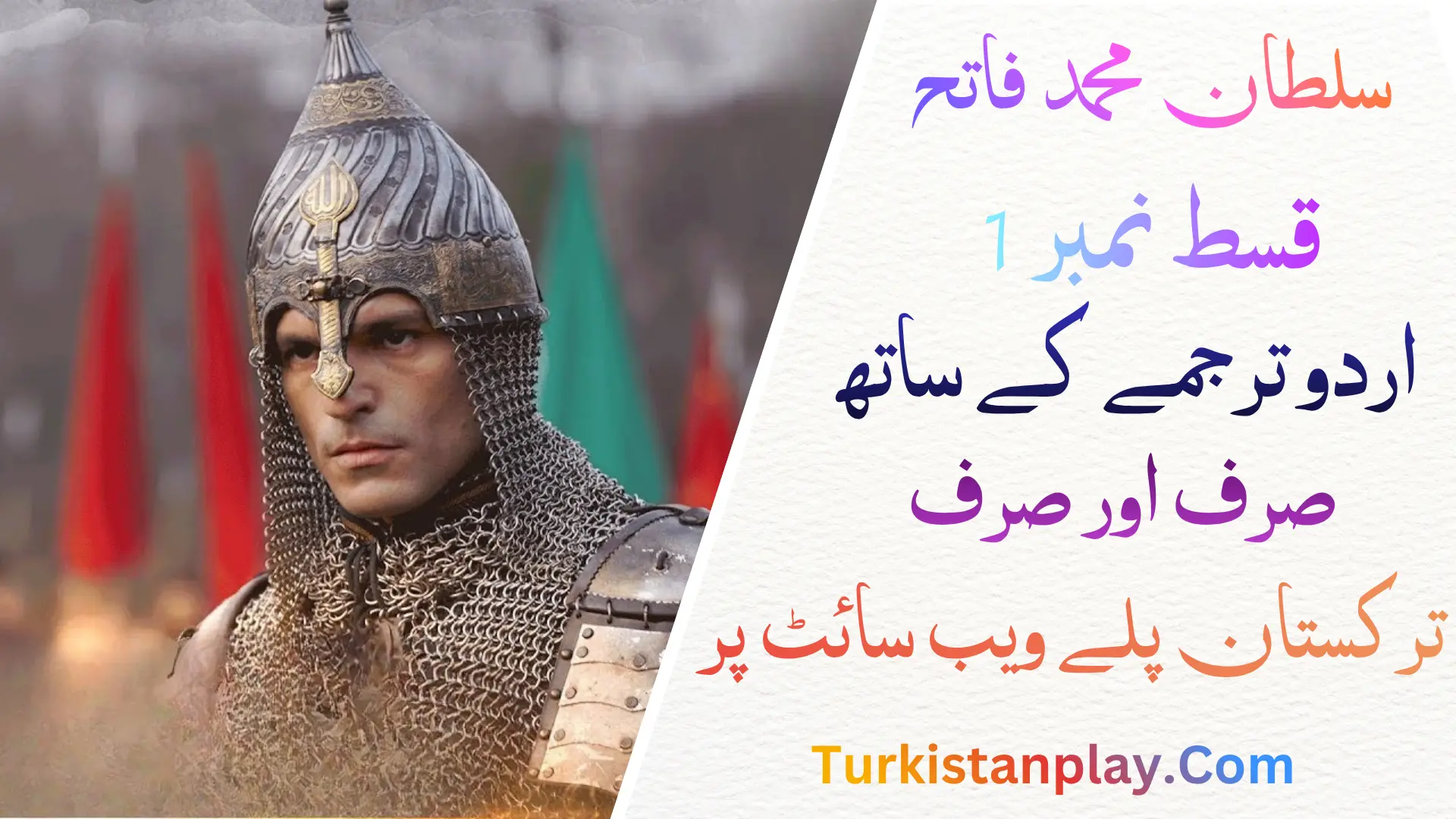

Sultan Muhammad Fatih Episode 2 In Urdu Subtitle
Echoes of Sovereignty: Naval Warfare, Princely Defiance, and Geopolitical Intrigues in the Early Ottoman Era
The history of the eastern Mediterranean is a mesmerizing story of shifting borders, maritime warfare, and high-stakes diplomacy. During the transitional years of the early Ottoman state, the race for regional dominance was fought on two fronts: across the open waters of the Aegean Sea and within the secretive corridors of imperial palaces.
This comprehensive analysis explores a critical historical chapter where the Ottoman state faced the devastating economic effects of organized piracy, the political defiance of an ambitious young prince, and a massive web of international conspiracies involving the Vatican, the Venetian Republic, and the fading Byzantine Empire.
1. The Maritime Crisis: The Cost of Aegean Piracy
During this era, the economic lifeblood of the region—sea trade—was under constant threat. Marine trade routes faced devastating challenges due to ruthless pirate attacks on merchant shipments.
The Economic Damage to Trade Guilds
The notorious pirate captain Capello orchestrated a series of relentless raids that crippled regional logistics. These maritime ambushes resulted in massive losses of time and money, hitting the local Ahi trade guilds particularly hard. The constant looting of caravans and sea cargo spread despair across local commercial hubs and military commands.
The Threat of Mass Migration
This economic gridlock created a major political crisis for the ruling administration. If the state could not guarantee safety along trade routes, it risked losing public support, which could trigger mass migration away from vulnerable coastal regions. Realizing that commerce would stall without immediate intervention, the ruling prince called for a swift, aggressive naval counterattack.
2. Şehzade Mehmet: The Fine Line Between Rebel and Ruler
At the heart of the empire’s internal political tension stood Şehzade Mehmet. Stationed in the province of Saruhan, the young prince’s growing influence and restless ambition created deep anxiety within the central government in the capital.
Signs of Defiance and Economic Independence
Şehzade Mehmet’s actions frequently bordered on insubordination, posing a direct challenge to the state’s central stability. First, close aides presented Mehmet with a family heirloom sword, a ritual traditional to leadership transitions. This gesture signaled his rising status and his preparation to assume ultimate authority.
Second, Mehmet bypassed standard royal channels to engage directly in commercial relations with Venice. This independent diplomacy raised serious suspicions among veteran court officials, who feared dangerous foreign entanglements.
The Palace Dilemma
The Sultan’s advisors debated whether to treat the young prince as a rebellious son or as the rightful heir to the throne. High-ranking officials argued over whether to inform Sultan Murat about Mehmet’s defiance, or wait for a major public event—like the upcoming royal circumcision ceremony—to crack down on his growing independence. Despite accusations from detractors who labeled him a rebel, Mehmet’s massive support network made him irreplaceable to the empire’s future stability.
3. The Philosophical Pillars of Ottoman Governance
Amid these internal clashes and external naval threats, Ottoman intellectuals and rulers relied on a sophisticated framework of political philosophy to maintain order. The ideal state was believed to rest upon two foundational pillars: Knowledge and Justice.
Drawing inspiration from classical philosophers like Plato, Ottoman statecraft split the concept of justice into two distinct operational forms:
- Distributive Justice: The fair, balanced allocation of resources, wealth, and honors among all citizens to prevent civil unrest.
- Regulatory Justice: The strict maintenance of social order, legal boundaries, and institutional discipline to protect the public from internal chaos.
This philosophical foundation argued that even the highest forms of human knowledge and cultural enjoyment would collapse without strong social order. Consequently, enforcing justice through military discipline was viewed as a moral necessity.
4. The Geopolitical Chessboard: Vatican Strategies and Byzantine Decay
While the Ottomans dealt with internal succession anxieties, a massive international coalition was forming across Europe to halt their expansion.
The Vatican’s New Order
Deep within the Vatican, high-level meetings mapped out a grand strategy to counter growing Turkish influence. Rejecting any form of peaceful negotiation, a powerful Cardinal pushed for a military campaign led by General Ymun Evren. This strategy aimed to crush the pirate networks allied with the Ottomans and isolate their naval forces.
The Decline of Byzantium
In sharp contrast to the rising Ottoman state, the Byzantine Empire was trapped in a downward spiral of internal decay. The Byzantine court was fractured by demotions, betrayals, and harsh accusations between the Emperor and competing noble factions.
At the same time, the failing health of the Byzantine emperor and the controversial rise of Demetrios triggered a massive succession crisis. Desperate for survival, Byzantine factions sought alliances with the Vatican, a move that many local Orthodox Christians feared would destroy their religious independence.
5. Espionage, Intelligence, and the Naval Campaign Against Capello
To permanently end Pirate Capello’s dominance in the Aegean Sea, the Ottoman military launched a massive, highly coordinated intelligence and naval campaign.
Harsh Interrogations and Poison
Dismantling the pirate networks required deep intelligence work. Ottoman agents captured a key pirate figure named Andrea, subjecting him to harsh interrogations to locate Capello’s hidden bases.
In a grim display of medieval enforcement, interrogation teams used slow poisoning as a psychological and physical tool. This ruthless method highlights the extreme measures used by early state intelligence services to extract vital military information.
The Eclipse and the Assault of 100,000 Warriors
The Ottoman military machine mobilized an army estimated at 100,000 warriors, including elite fighters from the famous Malkoçoğlu family. The launch of this massive naval assault was timed to coincide with a rare astronomical event—a total solar eclipse. This ominous timing boosted troop morale, framing the campaign as a divinely sanctioned mission.
Backed by secret intelligence reports confirming Capello’s exact coordinates, the Ottoman fleet ambushed the pirate hideouts. The resulting battles were brutal, but the superior technology, heavy armor, and advanced artillery of the Ottoman forces easily overwhelmed the pirates.
6. Mercy as a Tool of Statecraft
In the aftermath of their decisive naval victory, Ottoman leaders demonstrated a pragmatic approach to governance by balancing severe justice with strategic mercy.
Instead of executing all captured pirate crews and foreign fighters, the state chose to spare many of them, offering them opportunities to serve the empire. This policy showed a keen understanding of human nature: true loyalty could often be won through unexpected mercy. By converting former enemies into useful subjects, the state strengthened its own naval capabilities while draining the manpower of its rivals.
Frequently Asked Questions (FAQs)
Q1: Why did Pirate Capello pose such a massive threat to the Ottoman Empire?
Ans: Capello targeted vital maritime trade routes in the Aegean Sea. His repeated raids caused heavy losses of time and money, devastated local Ahi trade guilds, and threatened to trigger mass migration away from vulnerable coastal towns due to safety concerns.
Q2: Why was Şehzade Mehmet’s relationship with Venice controversial?
Ans: Şehzade Mehmet engaged in independent commercial and trade relations with Venice without the permission of the capital. This economic independence, combined with his rising power in Saruhan, made court officials worry about foreign conspiracies and potential rebellion.
Q3: What were the two pillars of justice in Ottoman statecraft?
Ans: Ottoman governance divided justice into Distributive Justice (the fair allocation of resources and wealth among the population) and Regulatory Justice (maintaining law, order, and institutional discipline across the state).
Q4: How did the Vatican plan to counter Ottoman influence?
Ans: The Vatican refused to negotiate, choosing instead to build a Christian military alliance. Led by General Ymun Evren, this campaign targeted pirate-adjacent naval forces to weaken Ottoman dominance in the Aegean.
Q5: What role did technology and intelligence play in defeating the pirates?
Ans: The Ottomans used a massive network of informants, spies, and harsh interrogations to locate Capello’s secret bases. They then deployed a powerful force of 100,000 soldiers, elite Malkoçoğlu warriors, and advanced naval artillery to crush the pirate network.